
Why Voicemail Is Costing Home Service Businesses Jobs
Voicemail isn't just bad customer service for home service businesses. It's a daily revenue leak that hands jobs directly to competitors who pick up.
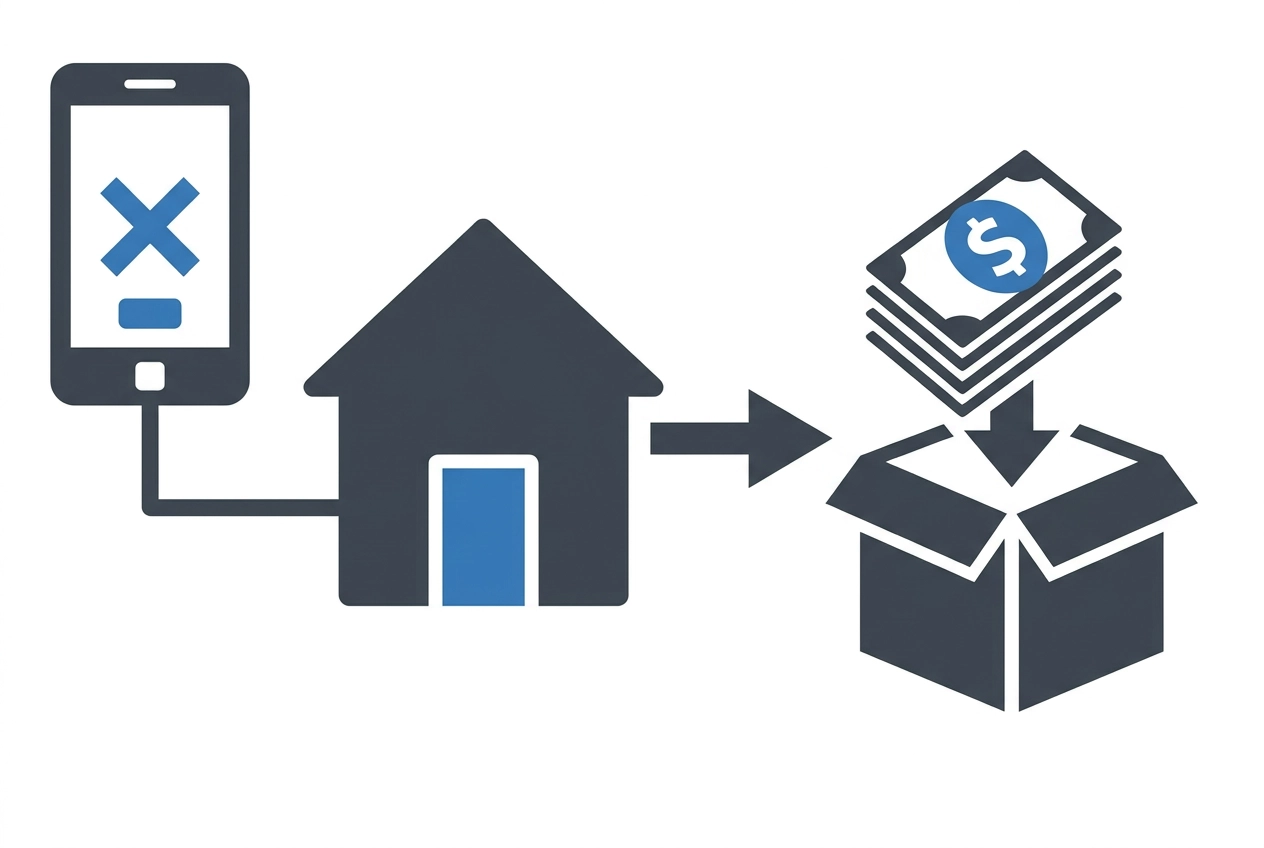
Right now, somewhere in your service area, a homeowner has a burst pipe, a failing HVAC unit, or a backed-up drain. They picked up the phone and called the first business on their list. That business sent them to voicemail. So they called the next number. That company picked up, booked the job, and just earned several hundred dollars that could have been yours.
This is not a rare scenario. It plays out dozens of times a day across plumbing, HVAC, electrical, and other home service trades, quietly draining revenue that never shows up on any report because you never knew the call existed.
In this analysis, we break down exactly what voicemail is costing your business, not just in missed calls, but in lost jobs, surrendered margins, and customers you are actively handing to competitors. We will examine the real math behind a missed call, identify when your business is most vulnerable, and show you how leading operators are closing this leak without adding headcount. The fix is more straightforward than most owners expect. The cost of waiting to act is not.
The Moment a Call Becomes a Lost Job
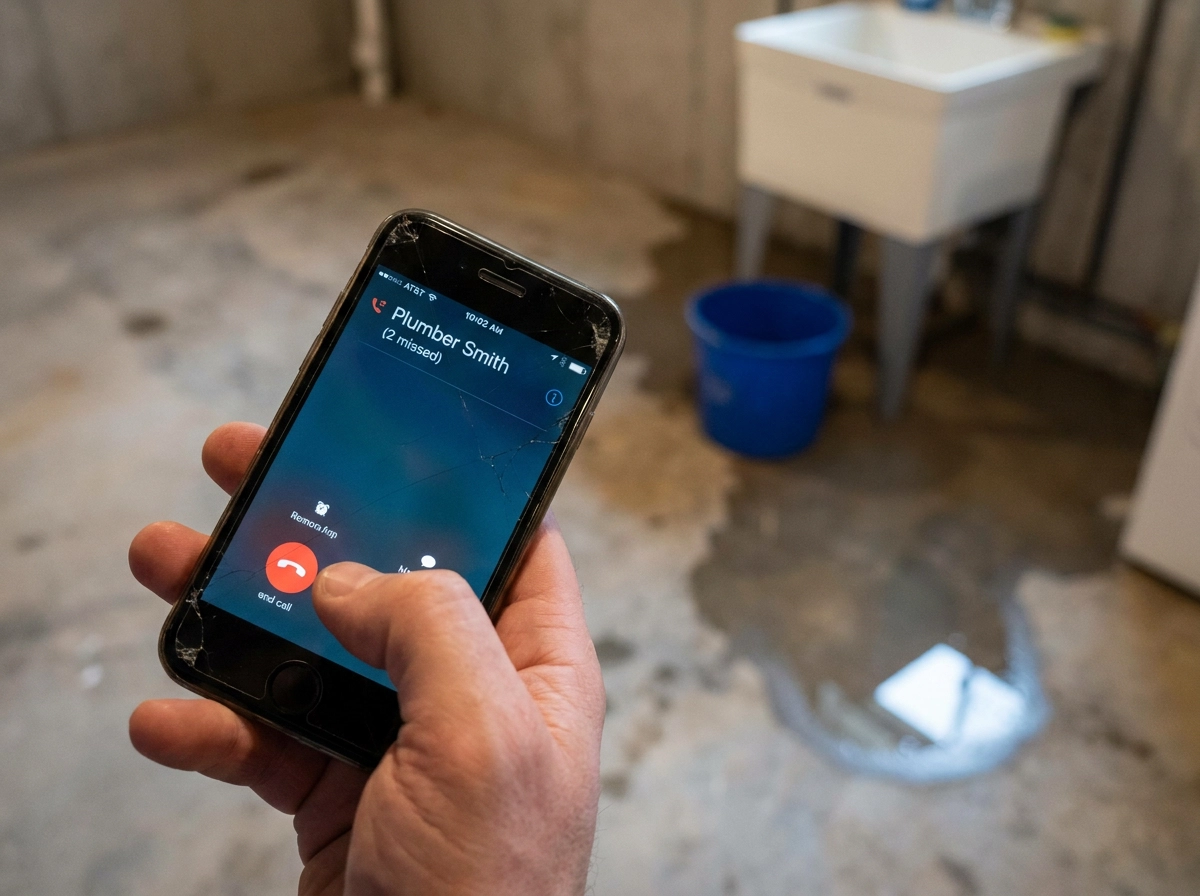
A homeowner notices water spreading across the basement floor. They grab their phone, search "emergency plumber near me," and tap the first result. It rings twice, then voicemail. They hang up before the beep.
Within 60 seconds, they have tapped the second result.
That sequence is not an edge case. It is the default behavior of a distressed customer in a high-urgency situation, and it plays out dozens of times a day across home service markets nationwide.
The critical word is distressed. A customer deciding where to order dinner can wait. A homeowner with a burst pipe, a furnace that quit in January, or an electrical panel throwing sparks is not evaluating options at leisure. They are looking for immediate reassurance that someone competent is coming. Voicemail provides neither reassurance nor a person. It provides silence and a tone, which reads as: try someone else.
Compare that to calling a restaurant. If the line is busy, most people will try again later or check the website. The need is real but not urgent. Home service calls carry a fundamentally different emotional weight. Urgency compresses the decision window from hours to seconds.
The competitive structure of local search makes this worse. A homeowner searching for a plumber or HVAC technician typically sees five to ten providers on the first results page. Every missed call could be your competitor's next job. Friction at first contact does not pause the customer's search; it advances it, immediately and automatically, to the next name on that list.
This is the core argument: voicemail is not a neutral holding pattern that delays a sale. It is an active transfer mechanism, routing your marketing investment, your reputation, and your booked job directly to whoever picks up next. Ready to stop losing calls? The following sections examine exactly what that transfer costs.
The 'They'll Call Back' Myth
Most operators have a ready answer when voicemail comes up: "We call everyone back within the hour." It sounds reasonable. In practice, it assumes a customer behavior that home services almost never sees.
By the time a callback happens, 30 to 60 minutes have passed. A homeowner with a burst pipe or a failed air conditioner in July does not wait 30 minutes. According to HomeAdvisor's 2025 data, 78% of homeowners hire the first company to respond. Not the cheapest. Not the highest-rated. The first. On average, that same homeowner submitted a request to 3.4 companies simultaneously. The callback workflow assumes your customer is waiting by the phone for you specifically. They are not.
The math on response speed is stark. Responding within 5 minutes makes a business 100 times more likely to connect with a lead compared to a 30-minute delay. After that window, lead quality drops 80%. A callback placed at the 45-minute mark is not a slightly slower version of answering live; it is a fundamentally different competitive position.
The callback workflow also introduces a second friction point that most operators never account for. When you return the call, the customer has to be available. If they are already on the phone with a competitor, mid-booking, or simply unavailable, the deal falls through at a second decision point entirely of your own creation.
After-hours scenarios remove any remaining margin for error. A voicemail logged at 9 PM will typically generate a callback the following morning. For an HVAC failure on a 95-degree night or a pipe flooding a basement at midnight, morning is commercially irrelevant. That job was booked hours earlier by whoever picked up. 34% of home service leads arrive outside business hours. Sending all of them to voicemail is not a gap; it is a policy.
What a Missed Call Actually Costs
Each of those lost calls carries a concrete dollar value that compounds quickly.
Consider the baseline job values: a standard plumbing service call represents a meaningful immediate job value, an HVAC service visit typically runs $450 to $950 per booked call (Service Roundtable benchmark), and installations and emergency repairs carry significantly higher ticket values. As a rough illustration, missing just three bookable calls per week at a conservative average job value multiplies quickly, even at $300 to $350 per job, the annual total exceeds $45,000 to $55,000.
That number understates the damage significantly.
A homeowner who books a first service call and has a good experience becomes a repeat customer. They call back for annual maintenance, system replacements, and the next emergency. They refer neighbors. A single missed first contact doesn't just eliminate one job; it eliminates the entire downstream relationship that job would have started. The true cost extends well beyond that first job, encompassing the repeat bookings, maintenance contracts, and referrals that a satisfied first-time customer generates.
Conversion rates during peak periods run higher, and job values skew toward emergency and replacement work rather than routine maintenance. Each missed call during these windows carries disproportionate revenue weight. That cost is not evenly distributed, it spikes during specific, predictable windows.
The damage extends beyond direct revenue. Businesses that consistently miss calls have fewer opportunities to earn Google reviews, because the customers they never served never became reviewers. Fewer reviews mean lower local search visibility, which reduces inbound call volume over time. The leak compounds quietly, month over month.
If you want to size this against your own call volume, a missed-call revenue audit can make the number concrete for your specific business.
When Voicemail Hurts Most: After Hours and Peak Seasons
Evenings and weekends account for a disproportionate share of home service call volume. Research tracking home service businesses places roughly 42% of revenue-generating inquiries outside standard business hours, yet most small and mid-size operators have zero live coverage during those windows. The phones roll to voicemail, and 86% of callers never leave a message.
Emergency scenarios are where the cost per missed call spikes highest. A homeowner calling at 9 PM about a basement flood or a failed furnace in January is not comparison shopping. They are ready to book with whoever picks up. That caller has high urgency, high intent, and near-zero patience for a callback. Send them to voicemail and they are already dialing the next result before the recording finishes.
Peak seasonal demand creates a different but equally damaging problem. During a July heat wave, an HVAC company's phones do not ring occasionally; they ring continuously. Staff already on calls cannot answer new ones. Those overflow calls hit voicemail carrying substantial average tickets, during the exact period when conversion probability is highest. Every one that goes unanswered flows to a competitor who had the capacity to pick up.
The critical insight across all three windows is that none of this is accidental. Voicemail spikes in the evening because that is when offices close. It spikes in summer because that is when HVAC demand peaks. The pattern is entirely predictable.
That is precisely what makes it a structural problem rather than an operational one. The leak is not random; it runs on a schedule that any home service business owner could draw from memory.
How Competitors Are Already Pulling Ahead
Competitors with automated answering capture exactly these calls, and that gap is now structurally widening.
This creates an asymmetric dynamic. A business that answers every call doesn't simply win more jobs proportionally; it collects the jobs the rest of the market forfeits by default. Research from CallRail's 2025 survey of 1,000 U.S. consumers found that 82% of callers who can't reach a business will call a competitor instead. The competitor's non-response isn't a neutral outcome. It's an active transfer of revenue.
The customer experience gap compounds this further. According to CallRail's same survey, 78% of consumers have abandoned a business after an unanswered call. That's not a delayed booking; it's a closed door.
The window to act on this is narrowing. AI-powered call handling adoption across the trades is accelerating through 2025 and 2026, with purpose-built platforms proliferating across every home service vertical. For businesses exploring home service industry topics and solutions, the pattern is consistent: early adopters are accumulating booked jobs, five-star reviews, and repeat customers while late movers maintain a status quo that is already eroding beneath them.
This is not a technology argument. The businesses pulling ahead aren't more sophisticated or better funded. They identified a gap that most operators have normalized and quietly stopped questioning, and they closed it.
Fixing the Leak Without Hiring More Staff
Closing the gap is the right move. The harder question for most operators is how.
A dedicated in-house receptionist adds tens of thousands of dollars in annual salary and benefits, and still leaves evenings, weekends, and lunch-hour spikes uncovered. Part-time staff are typically scheduled for the hours owners find convenient, not for the substantial share of revenue-generating calls that land outside 9-to-5.
Three realistic options exist:
Hire additional office staff. Highest cost, limited after-hours coverage, and adds fixed overhead regardless of call volume.
Use a traditional answering service. Lower cost, but these services typically read from scripts, can't qualify leads, and have no visibility into your booking calendar.
Deploy an AI receptionist like Virtual Dispatcher. 24/7 coverage, immediate answer on every call, lead qualification and appointment booking built in.
Virtual Dispatcher is purpose-built for home service businesses. It answers every inbound call immediately, handles common questions about services and pricing, qualifies the caller, books the appointment, and routes confirmed emergencies directly to an on-call technician. No human availability required.
The framing that matters here is revenue protection, not overhead addition. If your business is spending $2,000 to $5,000 per month on ads or SEO, those campaigns are already generating inbound calls. Voicemail is where that investment leaks out. Automated call handling doesn't create new leads; it captures the ones your marketing already paid for. Explore real-world outcomes in the case studies to see how that math plays out in practice.
The operational benefit compounds quickly. When phones are handled automatically, technicians stay on jobs and office staff focus on scheduling and customer service rather than call triage. More jobs get completed without adding a single person to the payroll. If you're ready to stop losing calls, the infrastructure to do it already exists.
Stop Sending Revenue to Voicemail

Start with a simple audit. Count how many calls your business misses in a typical week, including after-hours, peak days, and times when staff are tied up. Assign a realistic job value to each one. Annualize that figure. Then ask honestly whether voicemail is still a tool your margins can support.
Every call that hits voicemail is a decision point, and in home services, that decision moves fast. Research shows 85% of callers who reach voicemail never try again. They hang up, return to Google, and dial the next result. The job is gone before you know it existed. As a rough illustration, missing just three bookable calls per week at a conservative average job value multiplies quickly, even at $300 to $350 per job, the annual total exceeds $45,000 to $55,000. Voicemail isn't a minor inconvenience; it is a measurable, recurring drain on revenue your marketing spend already earned.
If that number concerns you, explore how AI receptionists are helping home service businesses answer every call. Virtual Dispatcher is built specifically for this: every call answered, every lead qualified, every job captured, without adding headcount.
Conclusion
Voicemail is not a safety net; it is a revenue leak hiding in plain sight. Every unanswered call represents a customer who moved on, a job that went to a competitor, and marketing dollars that produced nothing. The financial impact is real and measurable, and the competitive gap it creates widens every single week.
The good news: this problem is solvable without hiring additional staff or overhauling your operations. Businesses that close this gap now are not just recovering lost revenue. They are building the reviews, relationships, and referrals that compound over time.
Do not let another peak season, after-hours emergency, or busy Tuesday drain your pipeline. Run the audit, know your number, and take action. Your next customer is already dialing. Make sure someone answers.
See how Virtual Dispatcher helps home service businesses capture every call.