
Will Your Customers Accept an AI Receptionist? What Home Service Companies Need to Know
Worried an AI receptionist will hurt your brand? Learn what callers actually think, why transparency works, and when AI should hand off to a human.
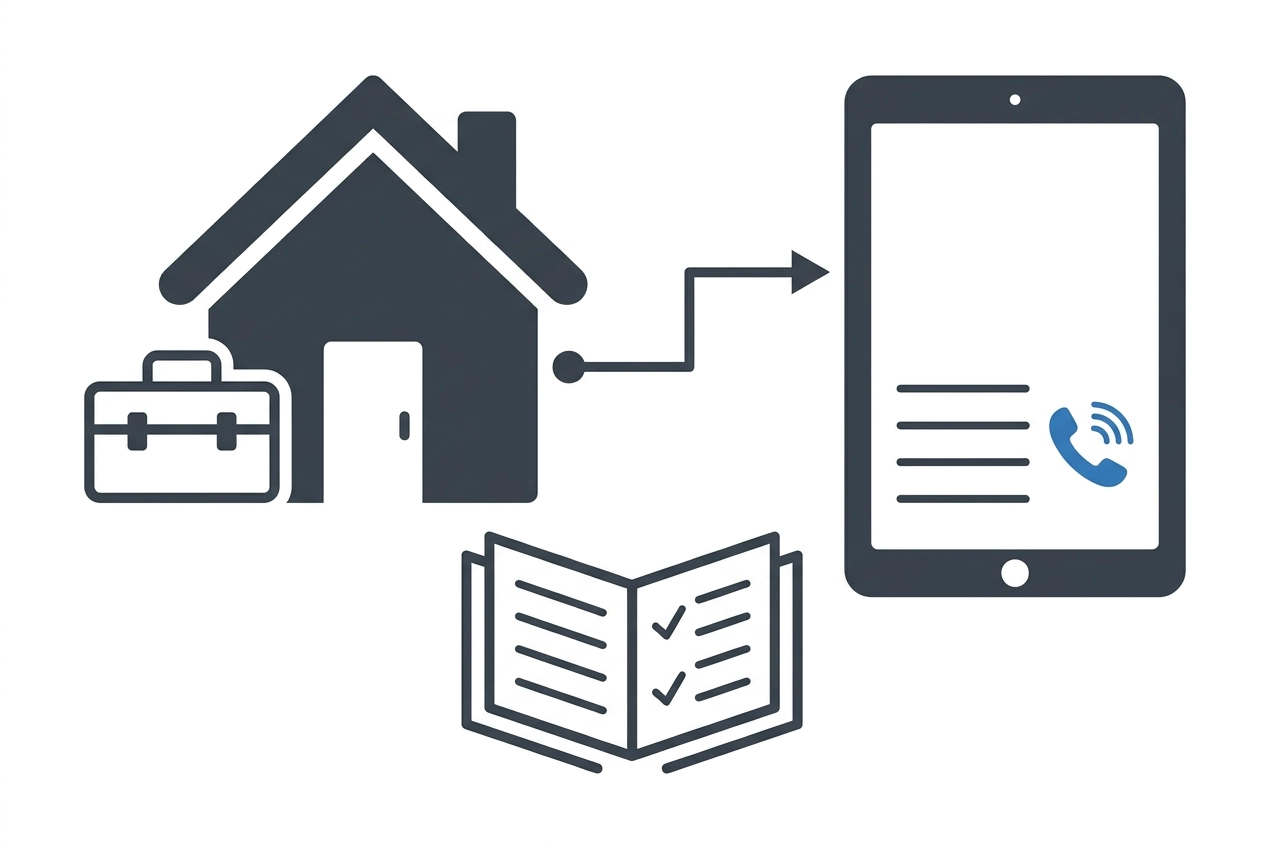
Picture this: your phone rings at 7:43 on a Tuesday night. You're wrapping up a job, your hands are dirty, and you can't answer. By the time you listen to the voicemail, if there even is one, that homeowner has already called your competitor and booked the appointment.
This is the quiet revenue leak that most home service businesses don't see on a spreadsheet, but absolutely feel at the end of the month.
The idea of an AI receptionist probably raises some questions for you. Will it sound robotic? Will customers hang up frustrated? Could it actually hurt the brand you've spent years building? Those concerns are completely valid, and this post addresses them directly.
What you'll find here is an honest, practical look at what callers actually experience when AI picks up, why being transparent about it builds more trust than hiding it, and where AI handles calls brilliantly versus where a human needs to step in. You'll also see the real revenue numbers that reframe the whole conversation. By the end, you'll have a clear picture of whether this technology fits your business.
The Fear Is Real, But So Is the Cost of Voicemail
Let's name it plainly: you're worried that an AI receptionist will make your plumbing or HVAC company sound cheap. That a caller will hear a robot voice and immediately wonder whether they've dialed the wrong number, or worse, whether your whole operation is as cut-rate as your phone system sounds.
That fear is fair. But here's what the numbers say about the alternative you're already running.

A scan of 62 home service businesses found that 41 of them were losing at least $900 per month to missed calls and slow follow-ups. That's not a technology problem. That's a voicemail problem, and it's already costing those businesses their reputation with callers right now.
The scale of the gap makes it harder to ignore. Roughly 66% of home service businesses have zero after-hours call handling in place. That means most of your competitors aren't answering those calls either; they're sending customers to voicemail or dead air, the same as you. The playing field isn't "your AI versus their human receptionist." It's your AI versus their voicemail.
And here's the part that should concern you most: homeowners don't leave voicemails. When a call goes unanswered, the overwhelming majority hang up and dial the next name on the list. Silence doesn't hold a customer; it releases them directly to whoever picks up. As this breakdown of what voicemail is actually costing home service businesses shows, that pattern repeats every single day across the industry.
So the real question isn't whether AI is perfect. It's whether AI is better than what your callers are experiencing right now when no one answers.
What Callers Actually Experience When They Reach an AI Receptionist
So what actually happens on the caller's end when they reach an AI instead of a person?
The short answer: far better than most owners expect. Today's AI receptionists bear almost no resemblance to the "press 1 for billing" phone trees of a decade ago. Natural language processing has advanced to the point where a caller can say "I need someone to look at my AC, it's making a grinding noise" and the system understands context, intent, and urgency without requiring them to repeat themselves or navigate a menu.

Callers care about three things when they call a home service company: feeling heard, getting accurate information, and knowing what happens next. A well-configured AI handles all three reliably. It acknowledges the caller's problem, provides accurate answers based on your actual services and policies, and closes every call with a clear next step, whether that's a confirmed booking, a callback time, or a transferred call.
Accuracy matters here more than most owners realize. High-performing AI receptionist systems achieve 99.8% transcription accuracy, capturing every detail a caller provides. That's a meaningful improvement over handwritten notes or replayed voicemails. If you want to understand just how much revenue slips through the cracks before a call is even handled well, this breakdown of what missed calls actually cost home service businesses puts the numbers in concrete terms.
Consider the after-hours comparison directly: a caller who reaches your AI at 10 p.m., books a next-morning appointment, and gets a confirmation text has a genuinely better experience than a caller who hits voicemail and waits until 8 a.m. to hear back. One interaction feels resolved. The other feels like a question mark.
That distinction points to the real standard your customers are measuring you against. They are not evaluating the technology. They are evaluating whether they felt taken care of. When the answer is yes, the how rarely comes up.
Transparency vs. Deception: Why Being Upfront About AI Builds More Trust
Knowing that callers respond well to a professional AI interaction is one thing. Deciding how to introduce that AI is a separate choice, and it carries real brand consequences.
Two approaches exist. You can identify the AI upfront, clearly and confidently. Or you can let callers assume they're speaking with a human and hope they never notice. The second option feels safer on the surface. It isn't.
A caller who figures out mid-conversation that they weren't speaking with a person rarely just shrugs it off. They feel misled, and that reaction attaches to your company name, not to the technology. Trust, once broken on a first call, rarely recovers into a booked job.
Transparent disclosure, done right, doesn't sound like an apology. It sounds like this:
"You've reached [Company Name]. I'm an automated assistant, and I can schedule your appointment, answer questions about our services, or connect you with our team."
That greeting is professional, immediate, and tells the caller exactly what they can accomplish in the next 60 seconds. It sets expectations without undercutting confidence.
The friction concern is also less significant than most owners expect. Customers already interact with AI assistants when they call their bank, track a package, or ask their phone for directions. A clear, confident disclosure paired with immediate helpfulness rarely causes callers to hang up. What causes hang-ups is feeling stuck, confused, or ignored.
Regulatory pressure adds another reason to build transparent habits now. The EU AI Act's Article 50 transparency obligations took effect in August 2026, requiring disclosure when users interact with AI systems. U.S. businesses that serve international customers or operate across state lines should treat this as a preview, not a distant concern. Businesses that adopt transparent practices early avoid compliance scrambles later.
The deeper goal here isn't to convince callers that AI matches a human. It's to show them that your business respected their time enough to make sure something reliable always picks up. That's the message that builds goodwill. For a broader look at how leading tools handle this in practice, the best AI answering services for plumbers and HVAC companies covers what well-configured systems actually sound like in the field.
Four Real Call Scenarios: Where AI Excels and Where It Hands Off
Transparency sets the right tone. Now let's look at what that actually looks like in practice across the calls your business gets every day.
Scenario 1: After-hours routine booking It's 9:30 p.m. A homeowner wants to schedule an HVAC seasonal tune-up. The AI greets them by company name, collects their name, address, and preferred time slot, and books the job directly into your CRM, whether that's Housecall Pro, Jobber, or ServiceTitan. The caller gets a confirmation text before they put down the phone. No one on your team is woken up, and the job is already on tomorrow's schedule.
Scenario 2: Daytime emergency triage A homeowner calls about a burst pipe. The AI picks up on emergency keywords, confirms the situation in one or two quick questions, and immediately routes the call to the on-call technician, with a priority flag and the caller's details already captured. That handoff is faster than a receptionist putting someone on hold while they track down the right person. If you want to understand why routing speed matters beyond just answering calls, this breakdown of why a 24/7 answering service isn't enough for home service businesses is worth reading.
Scenario 3: Complex pricing or scope question A caller asks whether their insurance will cover a specific repair. The AI doesn't guess. It acknowledges the question, explains a team member needs to answer it accurately, captures contact details, and schedules a callback or live transfer. Honest and clean.
Scenario 4: Frustrated or irate caller A caller is upset about a previous appointment. The AI detects the negative tone, skips any attempt to resolve the complaint on its own, and immediately offers a live transfer or a same-day callback from a manager. The situation stays contained rather than escalating.
In every scenario, the AI's role is the same: make sure no caller falls through the cracks, and route anything complex to the right person without delay.
Setting Customer Expectations So Your Brand Stays Intact
Those four scenarios illustrate what good AI call handling looks like in practice. But the AI only performs that well if it's configured correctly from the start.
Feed it your actual business, not a generic template. Train the system on your real service areas, pricing ranges, common questions, and booking workflows. A caller who asks whether you serve their zip code, or roughly what a water heater replacement costs, should get an accurate answer that reflects your business, not a vague deflection that erodes confidence.
Match the greeting to your brand identity. A family-owned plumbing company that's been in the community for 30 years has a different voice than a regional HVAC franchise with multiple locations. Your AI greeting should use your company name and carry the tone your regular customers already recognize. "Thanks for calling Miller Plumbing" lands differently than a generic opener, and that difference matters to callers who've worked with you before.
Define escalation rules before you go live. Decide specifically what the AI handles end-to-end, what triggers a same-day callback, and what routes immediately to a live person. Leaving this ambiguous creates inconsistent caller experiences and puts your team in reactive mode.
Loop in your technicians and office staff. If your team doesn't know what the AI already captured, they'll ask callers to repeat themselves, and that friction undermines the whole system. Make sure everyone knows what information arrives with each call.
Post-call summaries close the loop. When every interaction generates a text or CRM note, your office can scan completed calls each morning, flag anything that needs follow-up, and maintain quality control without replaying recordings. Everything your front phone line needs should flow into your existing workflow, not create a separate one to manage.
The Revenue Case That Reframes the Whole Conversation
All the brand configuration in the previous section matters more when the numbers behind it become clear.
Answering just one additional call per week can recover $800 to $3,000 in monthly revenue for a typical home service business. That is not a projection based on perfect conditions; it reflects what a single booked job is actually worth across plumbing, HVAC, and electrical trades. Even a modest improvement in call capture pays for itself quickly.
For electricians, the math is starker. Missed calls cost an estimated $10,000 to $20,000 annually per service van, a figure documented across the trades. Set that against an AI receptionist running at $150 to $400 per month, and the return calculation is not complicated.
The sharpest gap is after hours. 66% of home service competitors are not answering calls outside business hours. That means a homeowner calling at 8 p.m. about a furnace problem is almost certainly going to the first business that picks up. Showing up consistently at that moment is a competitive advantage, not a feature upgrade. If you want to understand the full scope of what unanswered phones cost at the business level, the data on how many leads home service companies lose from missed calls makes the compounding effect concrete.
There is also a customer acceptance dimension that rarely gets discussed. When a caller reaches your AI at 9 p.m., books a next-morning appointment, and gets a confirmation text, they do not spend the night wondering whether you are reliable. That first interaction builds goodwill that carries forward through the job, the review, and the referral.
Virtual Dispatcher is built specifically for this. It handles booking, emergency triage, CRM sync, and after-hours coverage without adding headcount, so every caller gets a response and every booked job makes it onto the schedule.
Your Customers Will Accept AI If the AI Does Its Job
The bottom line is straightforward: customers accept AI receptionists when the AI does its job. Not when it pretends to be human. Not when it sounds impressive. When the caller felt heard, got accurate information, and knew exactly what would happen next.
Transparency accelerates that acceptance. A peer-reviewed study on trust in AI chatbots confirms that perceived reliability and honest disclosure significantly shape how users respond to automated service interactions. Being upfront about AI, paired with immediate usefulness, builds more goodwill than any attempt to pass the system off as a human ever could. Callers who feel misled transfer that frustration to your brand. Callers who feel helped remember your company.
Before assuming AI is the risk, audit what is actually happening with your calls right now. Check your after-hours handling first. If calls are hitting voicemail, or going unanswered entirely, that is the problem already costing you customers. The question was never "AI versus a perfect experience." It was "AI versus silence."
Here is the actionable step: Pull your call data for the last 30 days. Count how many calls came in after 6 p.m. or on weekends. Then count how many got a live answer. That gap is your real exposure, and it is happening whether or not you ever deploy AI.
Businesses that implement AI receptionists transparently, train them on actual workflows, and set clear escalation rules are not cutting corners on customer experience. They are raising the floor. Every caller gets a real response. Every lead gets captured. Every emergency gets routed. That is not a compromise on service quality. That is what consistent service quality actually looks like.
Conclusion
The decision to adopt an AI receptionist is not really about technology. It is about whether your customers get answered or get sent to voicemail. Most callers will accept AI when it responds quickly, communicates honestly, and solves their problem. Most callers will not accept silence.
The key takeaways are simple: transparency builds trust, missed calls cost real revenue, and a well-configured AI raises your service floor rather than lowering it.
Your call to action is already in motion. Pull those 30 days of call data. Find the gap between calls received and calls answered. That number is your starting point, not AI adoption.
Home service companies that move forward thoughtfully will not just capture more leads. They will deliver the kind of consistent, responsive experience that keeps customers coming back and sending referrals. That is what this decision is really about.